Cats
The long legs of a lynx. The agility of a bobcat. The power of a cougar.
Come discover native wild cats of the Pacific Northwest.
Canada Lynx
Lynx canadensis
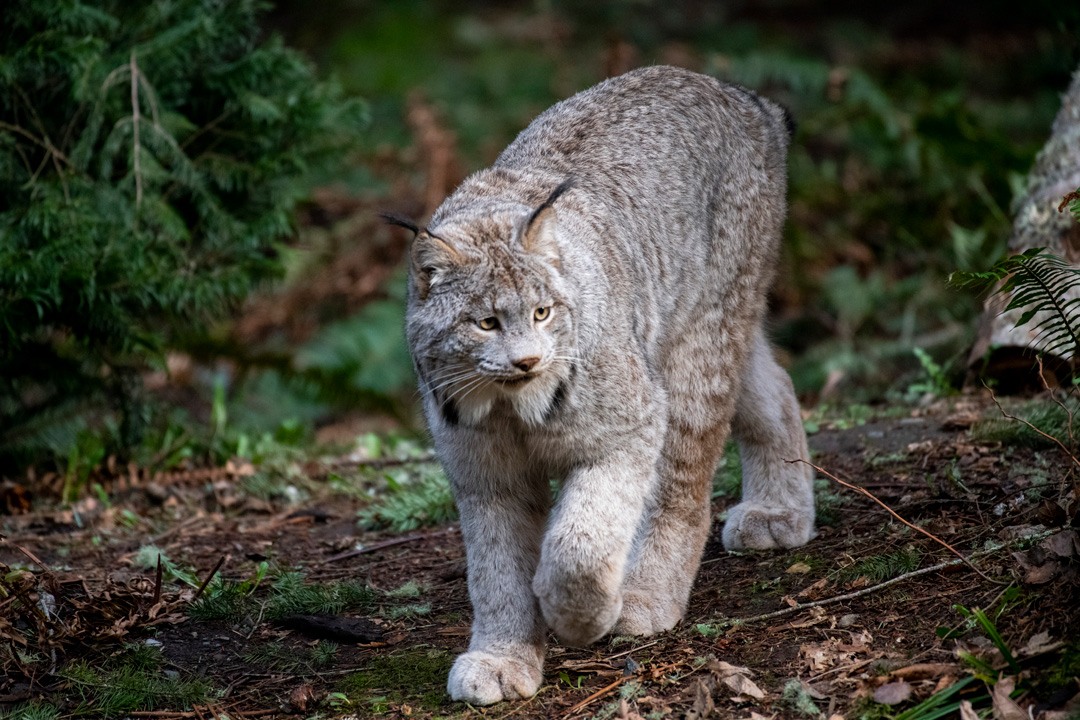
WHAT: A medium-sized cat with a short tail, long legs, large feet, and ears with 2-inch black hairs. The snowshoe-like feet and long legs help the lynx pursue prey in deep snow.
WHERE: The Canada lynx occurs across much of Canada and Alaska. Its range extends south into the western U.S. mountains, including Washington and the northern parts of Wisconsin, Michigan, New York, and New England.
SIZE: Length 2.5 to 3.5 feet; height (at the shoulder) about 1.5 feet; weight 18 to 24 pounds.
EATS: The diet consists predominantly of snowshoe hare (when they are abundant), small mammals, reptiles, invertebrates, and occasionally prey as large as deer.
BABIES: The breeding season extends from March to April. The gestation period is about 2 months. Generally, the female will give birth to 1-8 kittens. At birth, newborns weigh only a few ounces.
STATUS: Threatened.
FUN FACTS: Canada lynx populations depend on the availability of snowshoe hares; a decline in hare numbers leads to fewer lynx, and vice versa. Their large paws help them walk over deep snow like snowshoes. While not built for fast running, lynx effectively ambush or stalk their prey, relying on surprise for a successful capture.
Bobcat
Lynx rufus
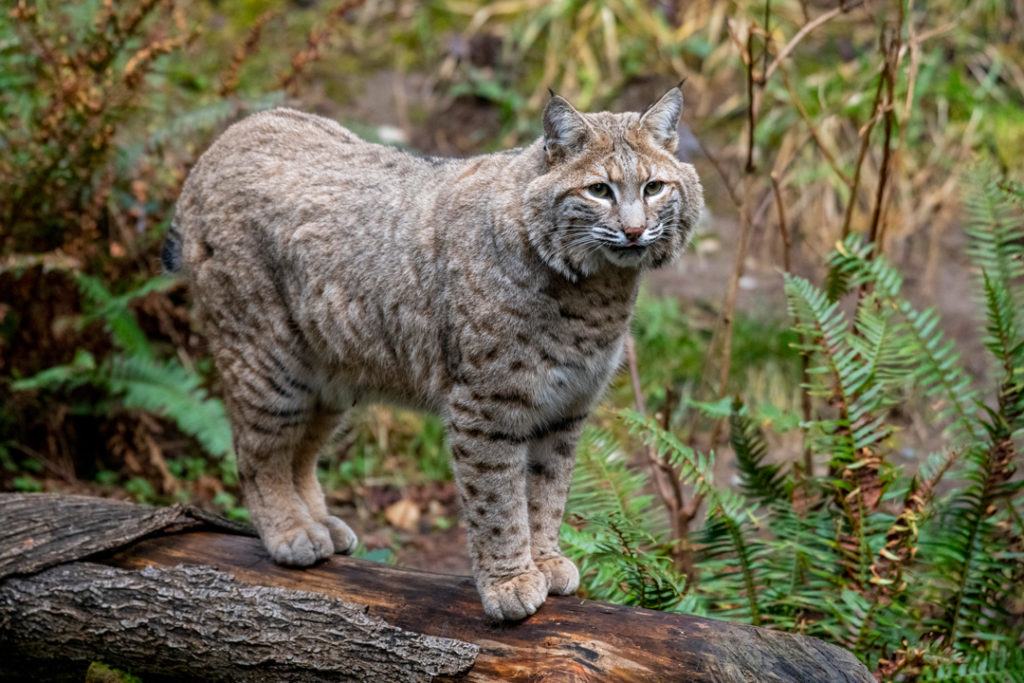
WHAT: A bobcat’s coat can range from light brown to gray or darker gray to black with spots or streaks. The ears have a prominent white spot on the back and a tuft of black hair at the tip. The short tail is black, only on top of the tip. Bobcats often walk with their short tail curled upwards, exposing the white tip on the underside.
WHERE: Most widely distributed native cat in North America.
SIZE: Length 2.5 to 3.5 feet; height (at the shoulder) 1 to 2 feet; weight 15 to 21 pounds.
EATS: The diets consist of small mammals, birds, reptiles, invertebrates, and occasionally, prey as large as deer.
BABIES: The breeding season extends from February through March. The gestation period is about 8 weeks. Generally, the female gives birth to two or three young. At birth, the newborn kittens weigh about ½ pound.
STATUS: Secure.
FUN FACTS: Bobcats are territorial and solitary animals that primarily hunt during the twilight hours or at night. They communicate through various vocalizations that are similar to those of domestic cats. Additionally, bobcats are exceptional climbers and often spend a significant amount of time in trees.
Cougar
Puma concolor
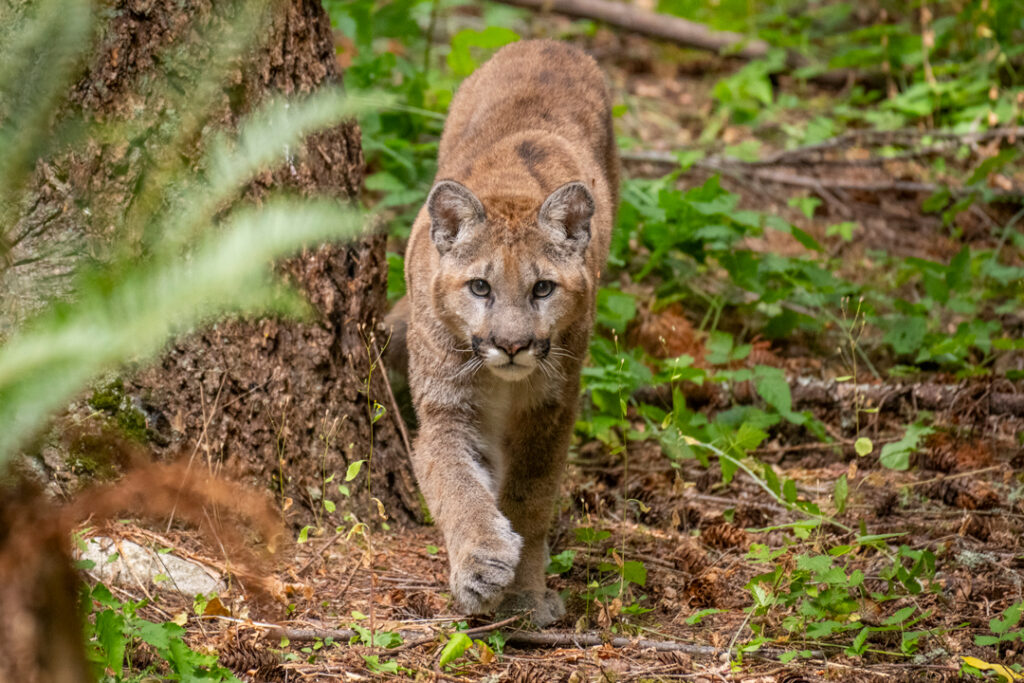
WHAT: Male cougars are considerably larger than females and cats from northern latitudes are the largest of the species. Coat color varies from a uniform russet to gray. Cougars have large yellow eyes and a long, heavy tail that aids their balance in leaps and high speed turns.
WHERE: Mountain, desert, and forested areas. Cougars range from Southern Canada, mid-west to the western US, small area in Florida, and down through Central America and into South America to the southern tip of Chile.
SIZE: Length 7 to 9.5 feet; height (at the shoulder) 24 to 35 inches; weight 75 to 200 pounds.
EATS: The diet consists primarily of deer, elk, and a variety of small mammals, birds and reptiles.
BABIES: The breeding season extends from February through March. The gestation period is about 8 weeks. Generally, the female gives birth to two or three young. At birth, the newborn kittens weigh about ½ pound.
STATUS: Secure.
FUN FACTS: Cougars are generally solitary and more often will stalk but sometimes ambush their quarry. The size of their territory is determined by the availability of large prey species (usually deer or elk) and can extend up to 350 square miles or more. The satellite territories of several females will overlap that of a dominant breeding male. They are powerful runners, leapers, and climbers that are adapted to a variety of habitats from the forest to the desert. They are very vocal and produce a variety of screams, growls, mews, hisses and even a purring sound that is similar to but louder than a housecat.
Cat Stories
Rescued cougar cubs Sullivan and Sienna, both 7-months-old and brimming with youthful energy, will make their public debut this Friday, July 18, at Northwest Trek Wildlife Park. Their debut comes just in time for the wildlife park’s 50th anniversary weekend celebration, marking a special moment for the cubs and the community. Guests can see the cubs exploring their forested habitat along the park’s Cat Loop, near the bobcat and lynx habitats. After months of medical care, recovery, and bonding behind the scenes, the duo is ready to meet guests and enjoy their new home. “These cubs have shown incredible …
February 29th is the hoppiest day of the year! Frogs, cats, goats, and more. We’re celebrating our leaping and jumping creatures this Leap Day. Cougar Cougars are powerful runners, leapers, and climbers. They can leap higher than any other mammal and have been recorded making a vertical jump of over 20 feet from a stationary position. Look for Carly, the cougar on the cat loop. BOBCATS Bobcats are also impressive jumpers. They can leap up to 10 feet high in the air. Look for bobcats Tanner and Tahoma on the cat loop. FROGS Some frogs can jump over 20 times their body …
Whenever Friday the 13th rolls around, even the least superstitious of us might look askance at a black cat or shiver at an owl hoot. But animal superstitions, although fun, can cause pretty bad luck for the wildlife who cross their paths. After all, we live in a world where 350,000 tourists can visit Scotland in one year just to try and spot the Loch Ness monster. If that same number of people all decided to hunt wolves or support the illegal trade in tiger parts, that would have a devastating effect on some amazing animals who are neither good …