Ursus arctos horribilis
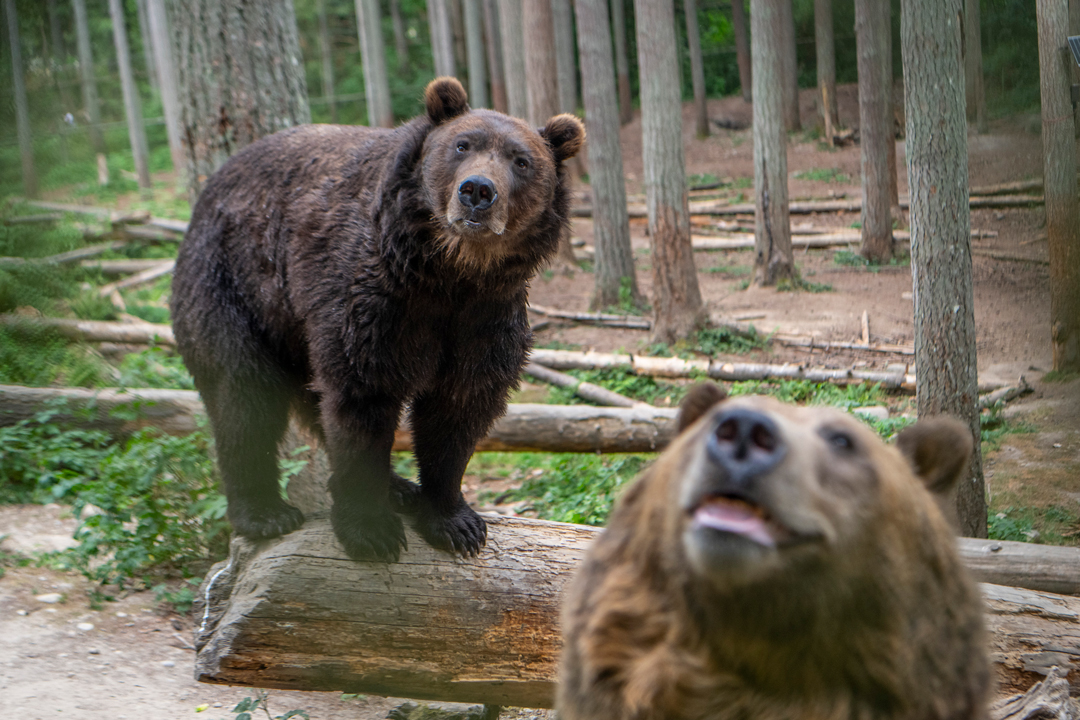 WHAT: Grizzlies have long, curved claws that are 2 to 4 inches long, a muscle-filled shoulder hump, and a concave face with a long snout. Their fur ranges in color from blonde to brown to black, and the name “grizzly” comes from their silver-colored guard hairs.
WHERE: Restricted to remote areas in Montana, Wyoming, Idaho, and Washington in the United States, southwestern Canada, and throughout Alaska.
SIZE: Varies greatly seasonally and geographically. Length 6.5 feet; height (at the shoulder) 3.35 feet; weight for males 400 to 790 pounds, for females 290 to 440 pounds.
EATS: Grizzly bears are opportunistic feeders that adjust their diet with the seasons. They primarily eat vegetation, insects, small mammals, carrion, and salmon, and may also prey on vulnerable ungulates like caribou, deer, and moose.
BABIES: The breeding season is from May to July, with a gestation period of 6.5 to 8.5 months, including delayed implantation. In January or February, the female typically gives birth to one to four blind cubs, each weighing about one pound.
STATUS: Federally threatened, and endangered in Washington.
FUN FACTS: Grizzly bears mark their territory by biting, scratching, and rubbing against specific trees. Mark trails consist of deep impressions in the ground that lead to these trees. While young grizzlies can climb, adult bears often become too large to do so, though they can still climb up to 15 feet. Grizzlies can run at speeds of up to 35 miles per hour and, when standing up on their hind legs, can reach heights of 12 feet.
Learn More
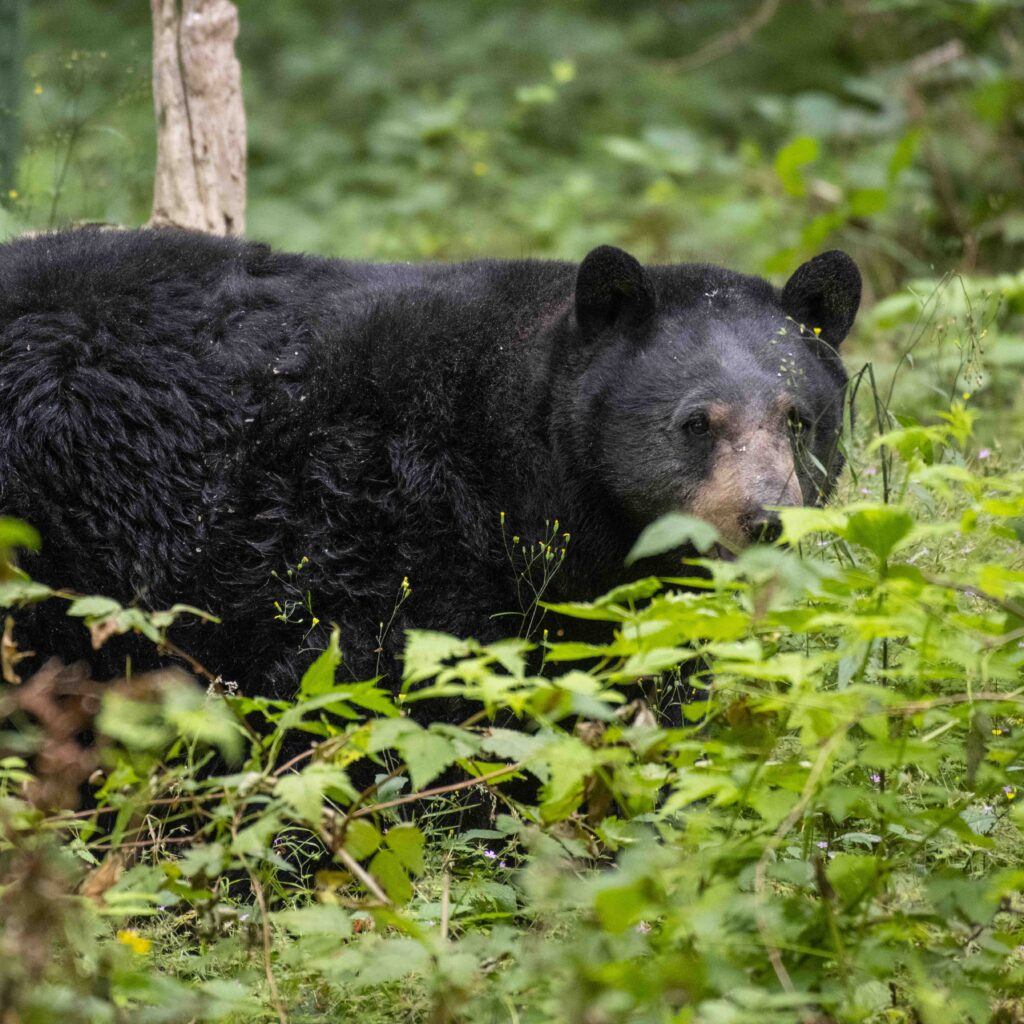 WHAT: Black bears are large, strong, plantigrade (walking on the whole sole of the foot) animals with a wide range of coat colors, including every shade of brown, bright blond, smoky blue, and even white.