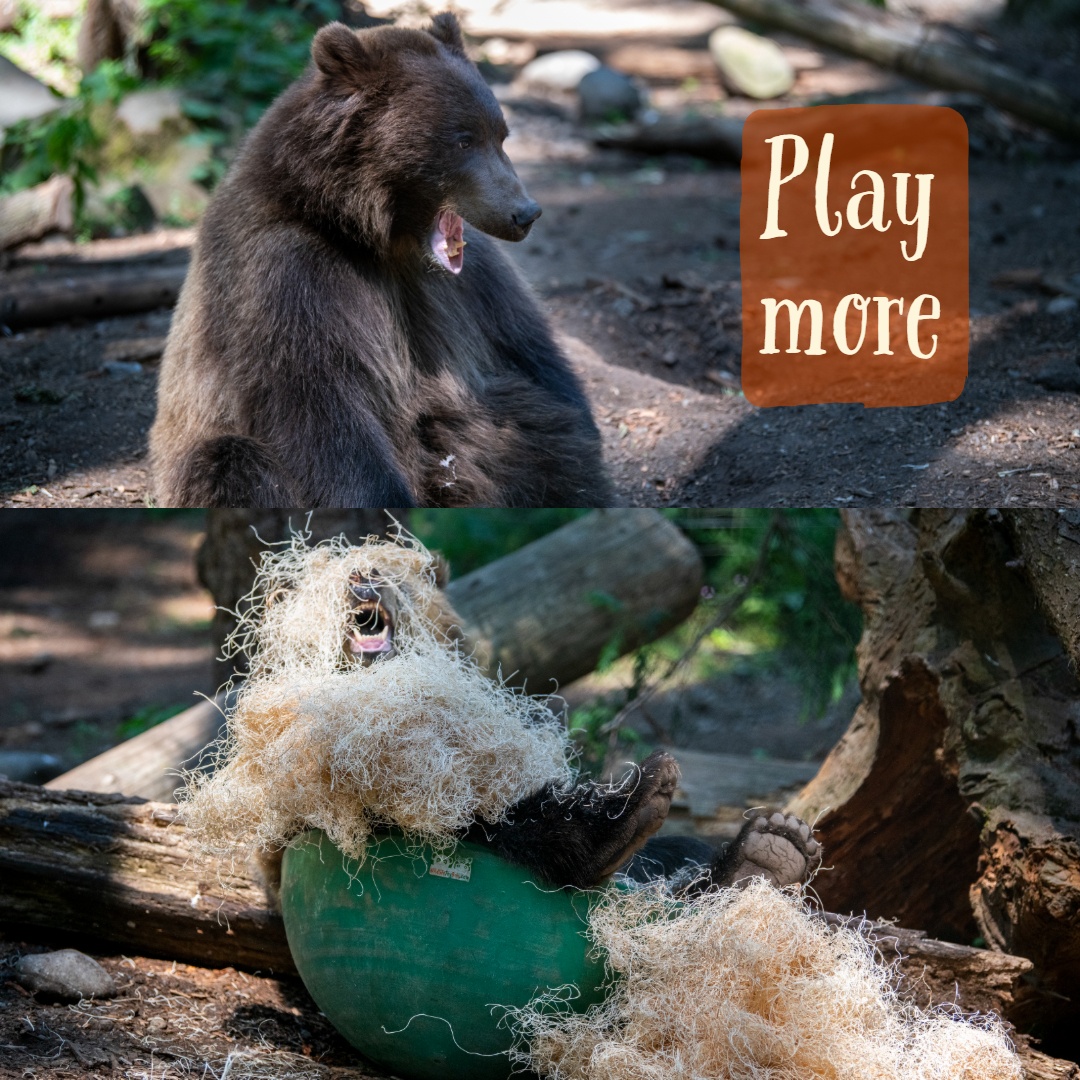
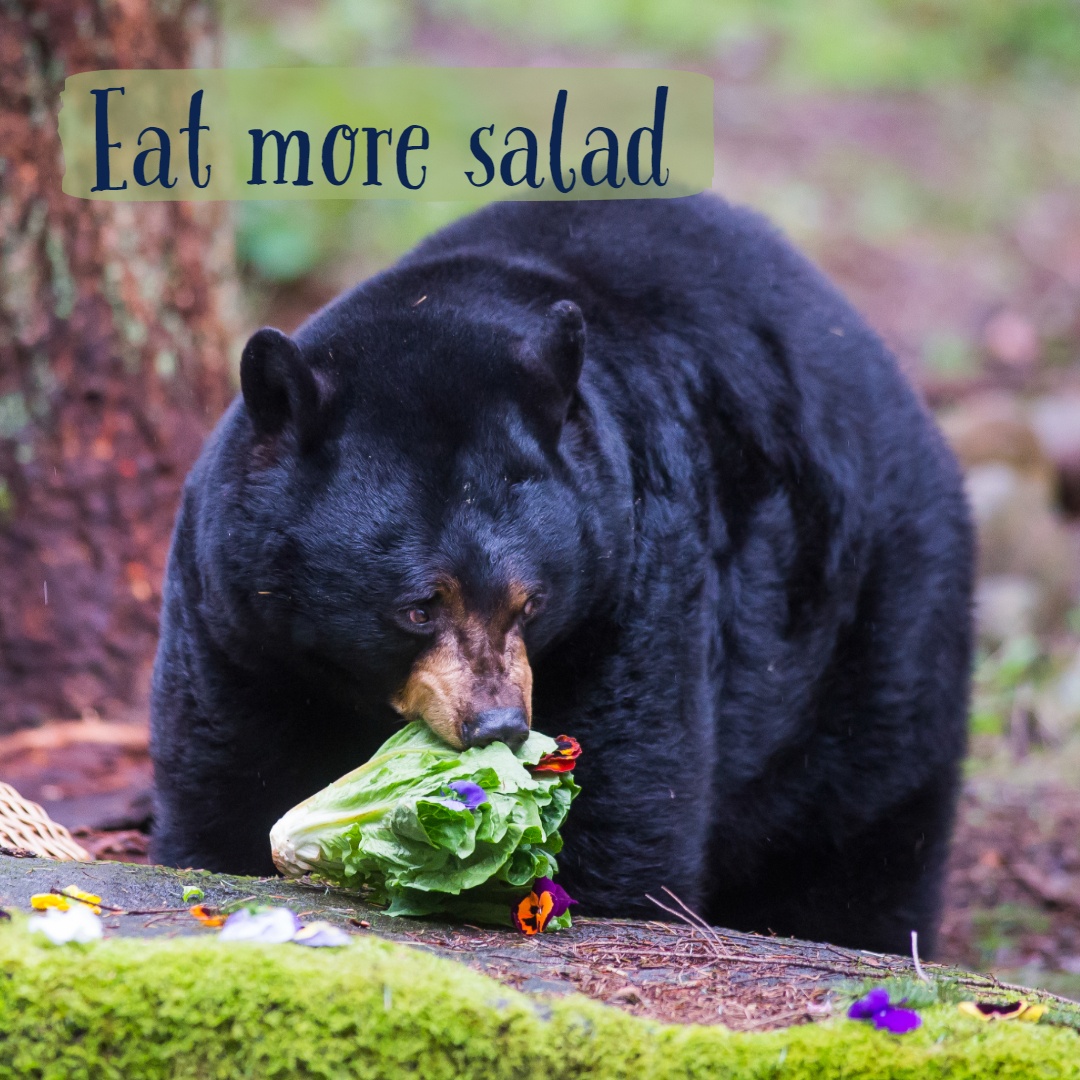
The black bears at Northwest Trek have gone down for their winter naps, also known as torpor. During torpor, a bear’s body temperature and respiratory and metabolic rates decrease to conserve energy. The bears can maintain this low energy sleeping state for days, weeks, or even months without having much activity outside their den, including eating and going to the bathroom. Northwest Trek’s black bears, Benton and Fern, typically go into torpor from November until February or March. “Benton and Fern do have periods of activity during the winter months, where they will eat, go to the bathroom, and …
Dust flying, shaggy heads butting, deep rumbles. Rut (breeding) season has begun with our bison! As bulls look to dominate the herd and attract the ladies, they roll and spar with each other, raising dust and making big vocalizations. Hop on a Discovery Tram Tour or book a Wild Drive or Keeper Adventure Tour and get front-row seats to the most exciting time of year at Northwest Trek – and meanwhile, watch the video to get a taste of the action.
The word “enrichment” is said dozens of times a day around Northwest Trek Wildlife Park. As in, “we have the enrichment ready for the otters” or “Luna and Calli the moose really seemed to enjoy their enrichment today” or “we need to create the beavers’ enrichment this afternoon.” Providing enriching experiences is a vital part of providing high-quality animal care at Northwest Trek- but what exactly is enrichment? “Enrichment items are things like food, smells or toys that enhance the health and well-being of the animals in our care,” said Haley, animal keeper and coordinator of the Behavioral Husbandry Committee …
Being native to the Pacific Northwest, the animals at Northwest Trek don’t seem to mind the colder winter weather. But the snowy owls at the park don’t just put up with it, they thrive in it. Tundra, a male, and Taiga, a female, embrace these cooler temperatures and it shows. “They’re more active at this time of year and we notice a big increase in their food drive,” said keeper Miranda. “Their favorite food is mice!” In the wild, snowy owls live near beaches and fields in the winter in Alaska and Canada… brrr! Now you see me, now you …
Owls get a bad rap around this time of the year. They’re associated with bad luck and hooting off evil – but none of that is true. Owls are only bad luck if you happen to be a mouse! And the only reason they hoot is to communicate with other owls. In some countries, owls are killed because of the negative associations with them. We want to change that narrative: owls are beautiful, intelligent creatures that keep the rodent population down. Northwest Trek’s 9-year-old barn owl, Teklus (pronounced Tuck-loose), is an excellent ambassador for his wild counterparts. If you’ve visited …
February 29th is the hoppiest day of the year! Frogs, cats, goats, and more. We’re celebrating our leaping and jumping creatures this Leap Day. Cougar Cougars are powerful runners, leapers, and climbers. They can leap higher than any other mammal and have been recorded making a vertical jump of over 20 feet from a stationary position. Look for Carly, the cougar on the cat loop. BOBCATS Bobcats are also impressive jumpers. They can leap up to 10 feet high in the air. Look for bobcats Tanner and Tahoma on the cat loop. FROGS Some frogs can jump over 20 times their body …
Valentine’s Day is just around the corner, and love is in the air at Northwest Trek Wildlife Park. There’s no concrete way to measure an animal’s love, but many of the animals at Northwest Trek are coupled up or longtime companions and enjoy each other’s company. Of course, Valentine’s Day isn’t just for couples- it’s about celebrating friendship and family, too! Moose “Moose are generally solitary animals, but our three moose calves love being in their own micro-herd,” said keeper Jordan. “They are seldom seen alone and prefer to forage, go on walks, swim, play in the meadows, and even …
Will the wolves be howling at the moon? If you look to the sky on Jan. 25, you will see a full moon traditionally known as the “Wolf” Moon. According to The Old Farmer’s Almanac, the names for full moons come from a number of places, including Native American groups, colonial Americans or other traditional North American names passed down through generations. The name of the January moon is derived from wolves, which tend to howl more often in the winter months. So why do wolves howl? To find their pack members and communicate with them in many different ways, …
One of Northwest Trek Wildlife Park’s resident river otters, Blakely, recently had a dentist appointment to fix a fractured tooth. Blakely traveled with Northwest Trek’s head veterinarian, Dr. Allison Case, to sister zoo Point Defiance Zoo & Aquarium’s healthcare hospital for the exam. Typically, Blakely would be treated at Northwest Trek, but the dentist was already at Point Defiance Zoo treating a tiger for a similar dental issue. Dr. Alice Sievers, a board-certified veterinary dentist and one of only 250 veterinary dental specialists in the world, volunteered her time with veterinary assistant Sharon Ghormley and veterinary technician Taylor Parker, all …
As another year ends, we reflect on the special moments Northwest Trek Wildlife Park had the privilege of being a part of in 2023. We raised and released hundreds of endangered northern leopard frogs into the wild, provided a new home to a hoary marmot, and helped Tacoma students develop empathy for wildlife through our award-winning Wildlife Champions program. Enjoy some of our favorite photos from this year, taken by staff photographer Katie Cotterill. Brothers gotta hug! Grizzly bears Huckleberry and Hawthorne hug during a wrestling play session. Mountain goat Klahhane sticks out his tongue. An elk calf stays close …