This Zookeeper Week, we spent time behind the scenes with Haley, a dedicated keeper at Northwest Trek Wildlife Park. Haley cares for the incredible animals in the Canine, Cat, and Bear habitats. We asked her to share what inspired her to become a zookeeper and what working with wildlife means to her.
How long have you been a zookeeper or aquarist?
I have been a zookeeper since 2014.
What do you wish more people knew about the species you care for?
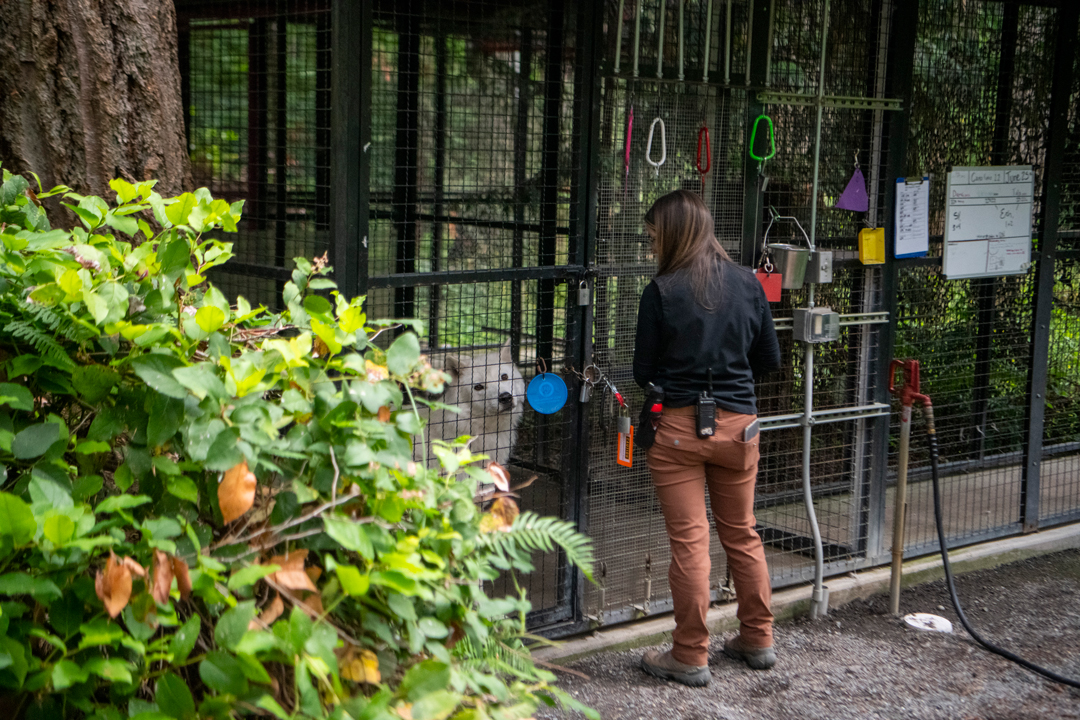
Carnivores don’t have to be feared! Bears, wolves, and cougars are animals that often provoke fear and anxiety in people, especially when camping, hiking, and otherwise enjoying the outdoors. Once you learn a little about their behaviors and motivations, it’s easier to understand how to coexist peacefully.
Can you share a moment when you really connected with an animal?
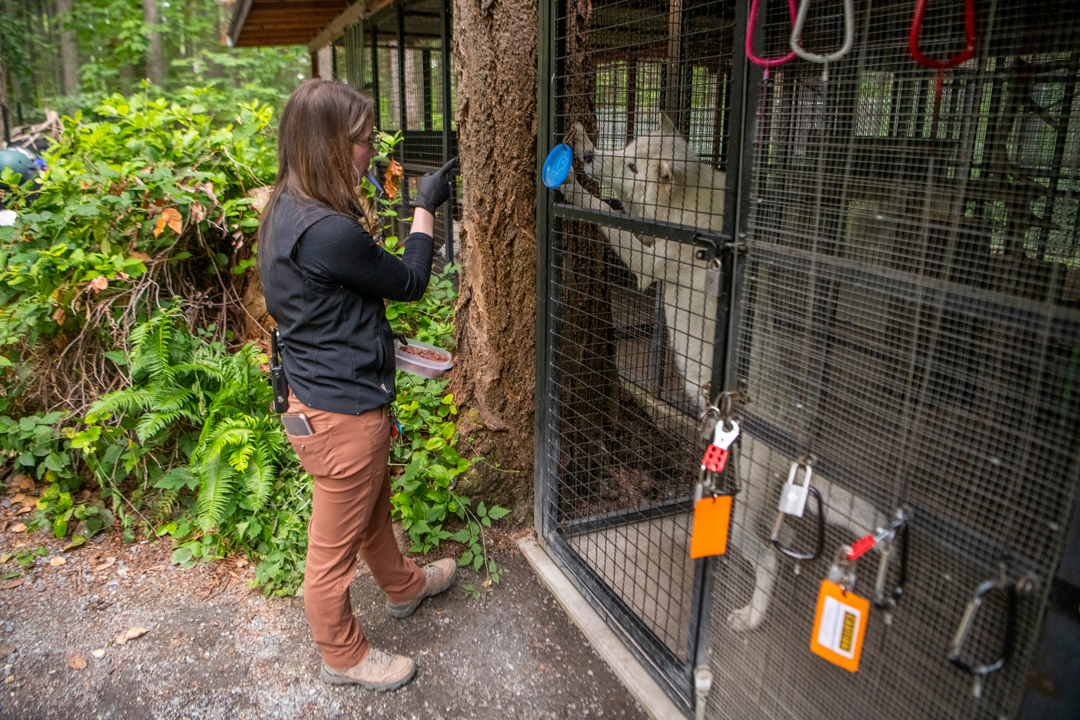
There have been so many connections over my years as a keeper, but one of the most meaningful connections I made was with our previous cougar, Carly. She was the animal that I worked very closely with when I was still learning a lot about the animal training process and how to get along with an animal who was typically more reserved around keepers. She provided our team with our first voluntary cat blood draw through positive reinforcement training, and I will never forget that moment.
What’s a recent success or milestone you’re proud of in your work?
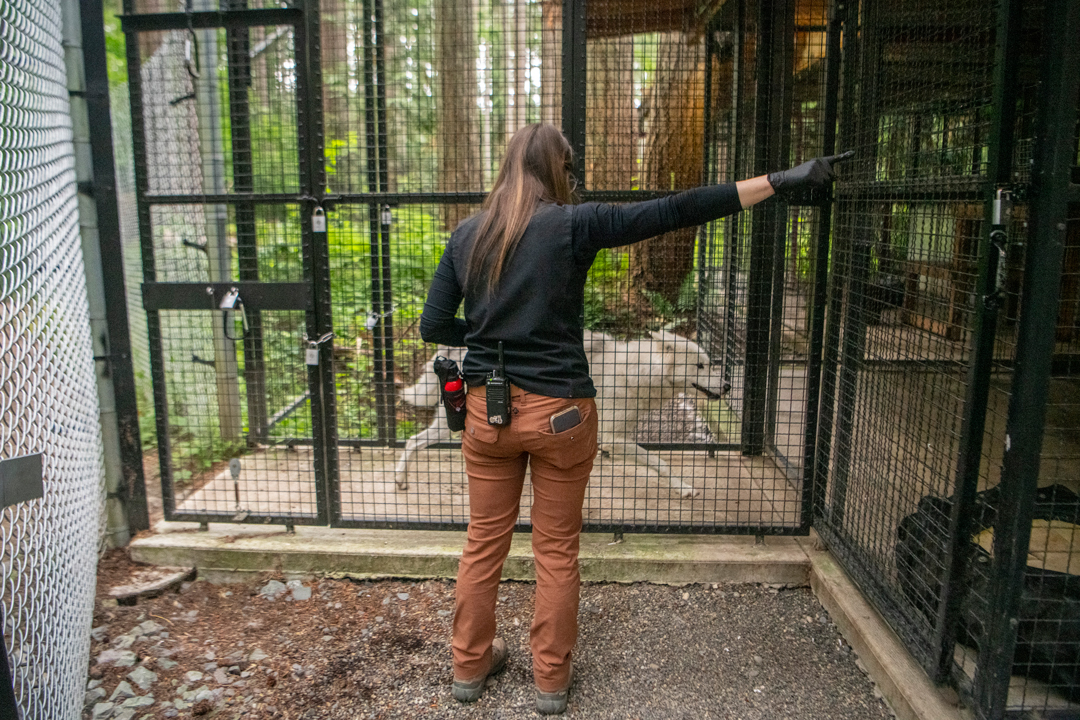
Recently, we’ve taken in two orphaned cougar cubs, and seeing the progress that they both have made over the past few months has been incredible. Sullivan, coming in with a very poor state of health, and Sienna, who came to us healthier but with a lot of behavioral hurdles in front of her, have impressed me every single day with their willingness to participate in everyday activities in the life of a cat living at Northwest Trek. This includes learning to take food calmly from keepers and voluntarily moving from one area to another. In Sullivan’s case, a huge success is the strength of his bond with his keepers—so much so that we can transport him to veterinary appointments and return home to find our relationship unchanged, as if we’d never asked him to do something as challenging as visiting the vet.

What inspired you to become a keeper?
When I did my internship before starting my career, I was still unsure about what aspect of wildlife I wanted to pursue as a career. After completing my internship at Northwest Trek, I realized that this organization perfectly combined my passions for wildlife, conservation, and outdoor recreation. I was inspired by the entire team at Northwest Trek and their mission to connect our community of people to the animals that live in it.

What advice would you give someone wanting to become a zookeeper?
Volunteering is a great way to test out some aspects of animal care before starting your career. I recommend trying out a few different types of organizations to see which setting best suits you.

What’s one of your funniest or most memorable animal moments?
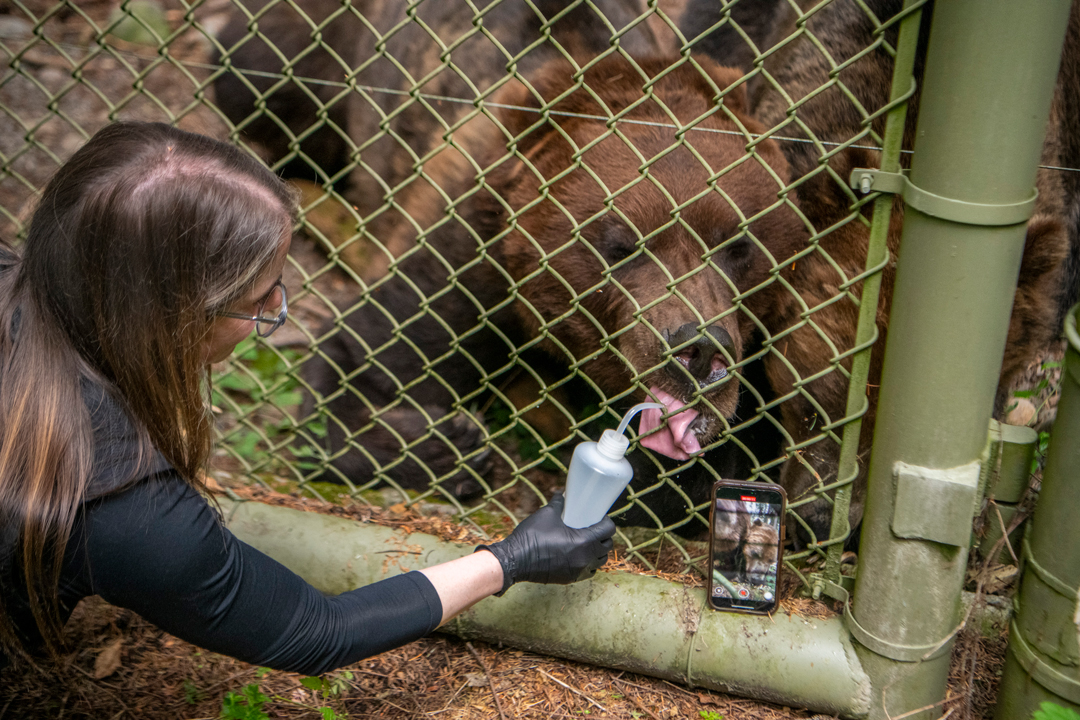
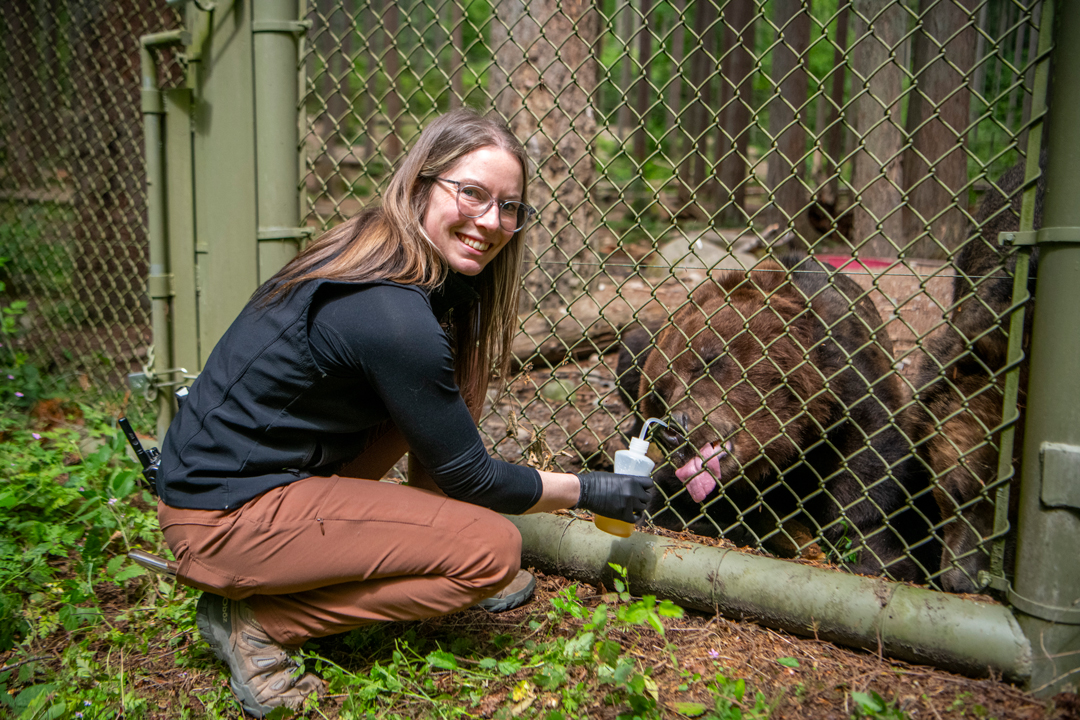
One of my most memorable moments was with the grizzly bears when they arrived at Northwest Trek. After much trepidation about living next to another grizzly bear, 9-month-old Hawthorne finally started showing signs that he was ready to open the door and share a room with Huckleberry. The moment we saw the pair licking each other through the door that divided their two dens, we knew we had to open it up and let them fully interact. Those first few days were tentative, but by the end of the week, we saw two unrelated baby bears living like brothers!
Do you have a favorite animal to work with, and why?
I love working with all the animals in my area, but if I had to choose just one, it would be Benton the black bear. He has the charm we all wish we had, is very motivated to train, and loves enrichment!

What’s your favorite animal fact to share with guests?
People are often surprised to learn that bears eat much more plant material than meat! 70-90% of a bear’s diet could be just plant material. At the park, we offer various diet items to match the bears’ preferences over the seasons, including fish and meat.