Looking for a meaningful way to treat your pet this holiday season? At Northwest Trek Wildlife Park, enrichment isn’t an extra, it’s an essential part of caring for animals. Whether it’s gray wolves following scent trails, bears investigating puzzle feeders, or skunks foraging for treats, every enrichment opportunity helps animals think, explore, and behave like they naturally would in the wild.
“We offer a variety of enrichment types to target specific natural behaviors we know our animals are capable of,” explains Haley, keeper and Behavioral Husbandry Coordinator at Northwest Trek. “The more we learn about an individual animal, like how they move through their habitat, what motivates them, what senses they rely on, the more meaningful and effective the enrichment becomes.”
This same philosophy can enrich life for your pets at home. And Northwest Trek keepers have some great inspiration for how to start.
- Know the behavior you want to encourage
Before keepers design enrichment, they start with research.
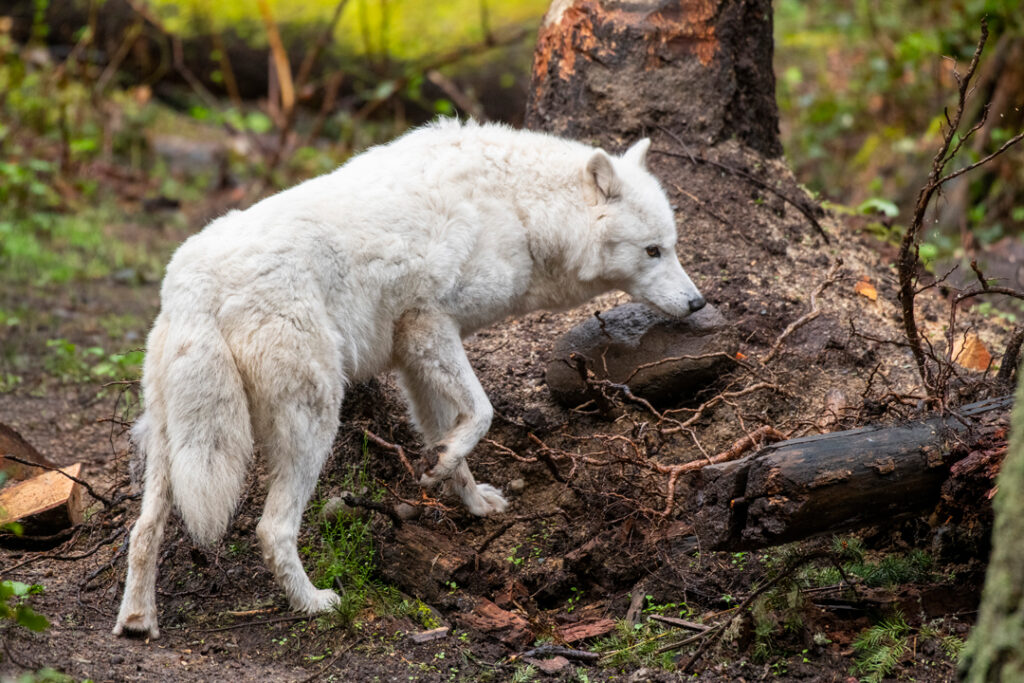
“We search for all the information we can find about the species and the individual we’re enriching,” Haley says. “For example, wolves take in incredible amounts of information through smell. They know when to rally together to hunt because they smell prey nearby, or when to patrol because they’ve detected a strange scent.”
At Northwest Trek, keepers use this natural strength to encourage healthy behaviors. They might place elk fur outside the habitat to mimic the presence of prey, or introduce new scents inside the habitat to promote exploring, play, and communication.
Your pet, especially if you have a dog, can benefit from the same principle.
“Searching and seeking behaviors are extremely important for all canid species,” Haley says. “Try offering your dog a new scent, like one drop of essential oil on a wool ball, and hide it somewhere in the house. Let them track it down.”
For some dogs, the search itself is the reward. For others, you can celebrate the discovery with a treat or favorite toy. Either way, it activates both brain and body, which is the hallmark of meaningful enrichment.
- Make food a challenge
In nature, finding food takes time, creativity, and persistence. Northwest Trek keepers design food presentations that reflect that challenge.
“Food isn’t always easy to obtain in the wild,” Haley explains. “Animals often experience failure before success. So, giving them puzzles to solve strengthens their cognitive skills.”

At Northwest Trek, bears, wolves, foxes, raccoons, and skunks often receive:
- PVC puzzle feeders capped and drilled with small holes
- Paper tubes bent at the ends and sprinkled with holes
- Frozen or hidden portions that require effort to retrieve
These can be replicated at home with simple materials from a hardware store. Just supervise closely, especially with eager chewers.
Northwest Trek keeper Wendi uses similar techniques at home with her own pets.
“My dog Opal is very active and needs that mental stimulation,” Wendi says. “We feed her exclusively through puzzle feeders now, never from a bowl. My son even 3D-printed a cylinder she has to push with her nose to release food.”

Her cat gets the enrichment treatment too. “We feed the cat in her crate every day,” she adds. “It keeps Opal out of the food and creates a positive association with the carrier. It makes trips to the vet a breeze!”
- Think like a wild animal
Enrichment should mimic the challenges an animal would face in nature. At Northwest Trek, that might mean:
- Scent trails for wolves
- Foraging puzzles for raccoons
- Stacked logs or browse for the porcupine and beavers
- Ice blocks or frozen scents for carnivores
- Tossed hay, hidden treats, or new textures for skunks and foxes
At home, the same thinking applies:
- Hide treats or toys to encourage exploration
- Offer new scents in safe, controlled ways
- Use puzzle feeders to mimic the challenge of earning food
- Try cardboard tubes, wrapped paper, or fleece braids for supervised play
“Animals are healthier mentally and physically when they have frequent opportunities to express natural behaviors,” Wendi says. “Even small daily choices can make a big difference.”

Give the gift of enrichment
Whether it’s wolves following a new scent, bears rolling puzzle feeders across their habitat, or beavers exploring fresh browse, each activity helps animals stay mentally sharp and physically engaged.
Your pets can benefit from the same approach. “It’s all about creating opportunities for animals to use their instincts in safe, engaging ways,” Haley says. “That’s something anyone can bring home.”
This holiday season, consider adding an enrichment project to your gift list. With a little creativity, you can give your pet fun, stimulating experiences that support their wellbeing and help them practice the natural behaviors that keep them healthy and confident.