On an early February morning, staff and volunteers at Northwest Trek Wildlife Park cleaned mason bee nesting blocks in an effort to set the bees up for a successful spring. We worked ahead of the warming weather and cleaned the mason bee nest boxes early to avoid waking the bees prematurely. Mason bees emerge from their cocoons when the temperature stays between 50 and 55 degrees for several consecutive days, a signal that spring is coming.
While mason bees can emerge naturally without assistance, cleaning their nest blocks removes mites, parasites, and built-up debris so they can begin their work right away.

About Mason Bees
Mason bees, particularly orchard mason bees like those found at Northwest Trek, have shiny, metallic bodies in shades of green, blue, or even black. They are covered in tiny hairs called scopa, which help them gather pollen as they visit flowers.
These early pollinators are gentle and efficient, diving headfirst into blooms to collect pollen, then transferring it from plant to plant. Because of this behavior, mason bees are often even more effective pollinators than many other bee species. They do not produce honey and are typically less aggressive than other bees because they are less territorial. Only female mason bees have stingers, and they are unlikely to use them unless in extreme danger.
Mason bees have a short window of time, roughly six to eight weeks, to pollinate early spring-blooming plants such as currants, Oregon grape, and salmonberry before completing their life cycle.
Caring for Mason Bees
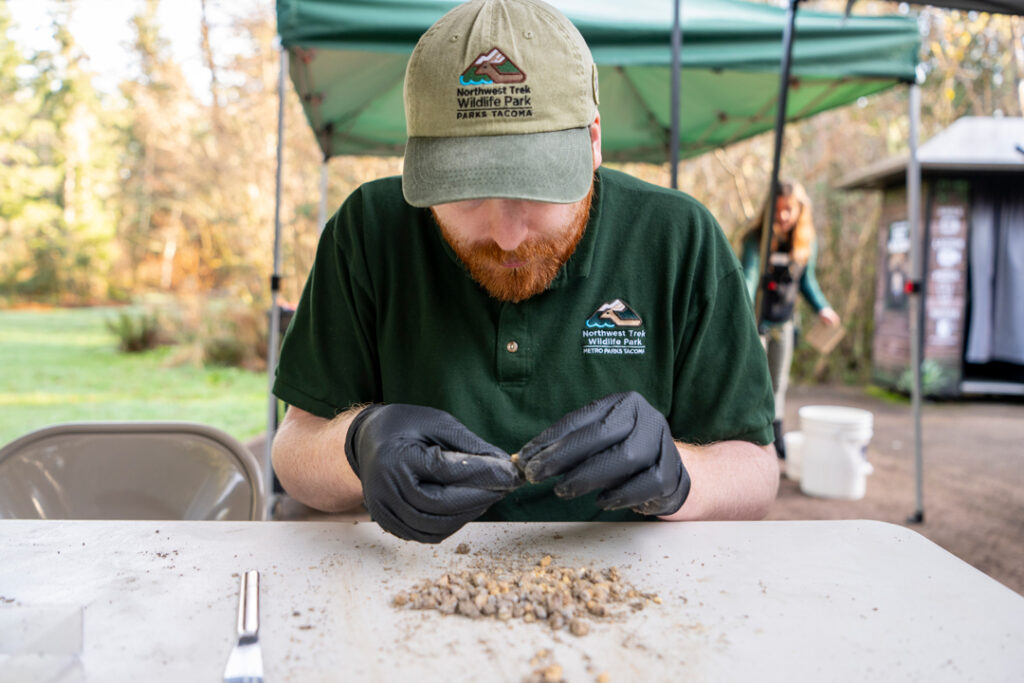
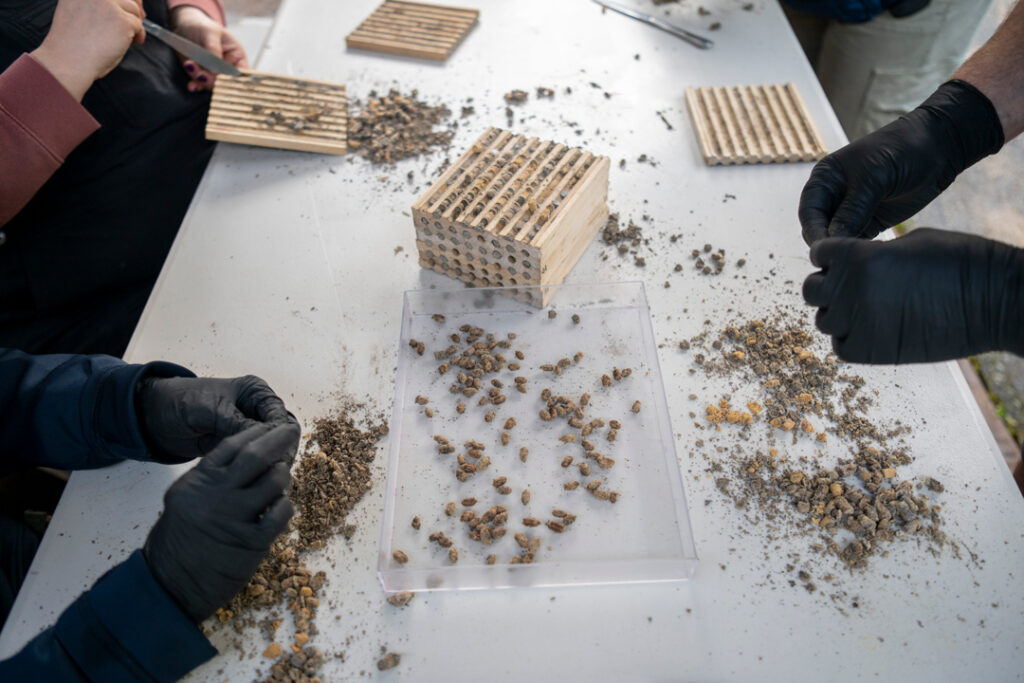
The mason bee nest blocks at Northwest Trek are specially designed to make cleaning easier. To clean them, we carefully separate the layers and gently scrape out each split tunnel, sifting through mud, pollen, and parasitic larvae to collect the tiny mason bee cocoons.

Female mason bees lay their eggs in narrow tunnels, placing a store of pollen alongside each egg before sealing the chamber with globs of mud, a behavior that gives the mason bee its name.
Female mason bees can determine the sex of their eggs before laying them. They place female eggs toward the back of the tunnels and male eggs closer to the entrance, allowing males to hatch first. In the wild, mason bees seek small openings in tree trunks, fallen branches, or bark left by birds and other insects. Our nest blocks provide a dedicated, safe space for mason bees to emerge from and return to year after year.

Preparing Cocoons for Emergence
As we collected the cocoons, we gave them a quick dip in a carefully diluted bleach-water solution to eliminate mites and mold. The cocoons were then rinsed in fresh water and left to air dry.

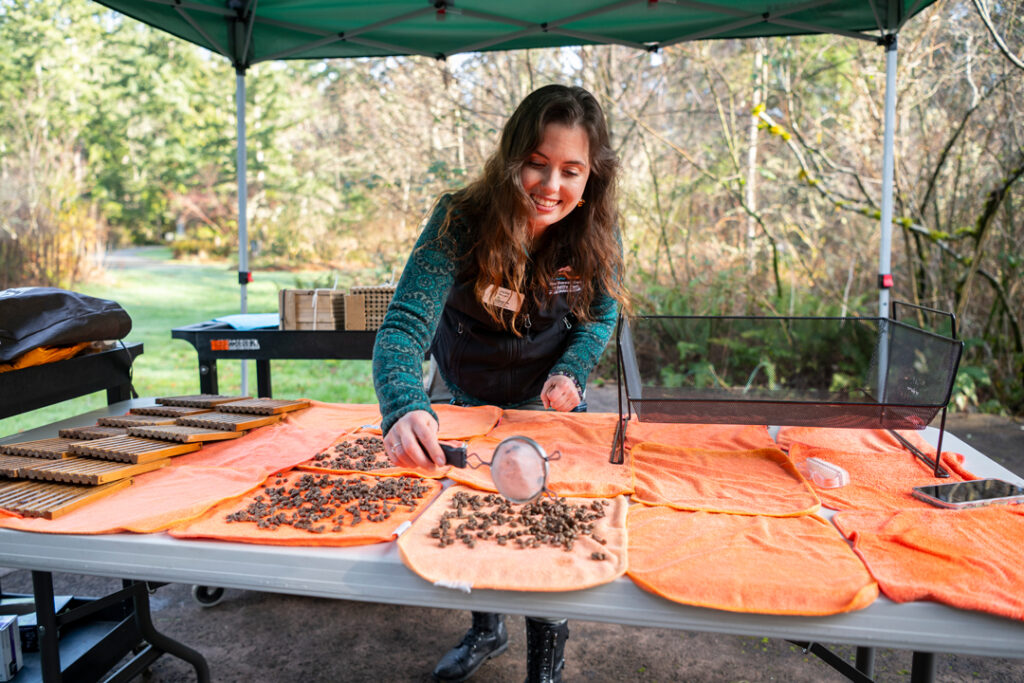
After the nest blocks were scrubbed clean, we weighed the collected cocoons: 25.89 ounces in total. They were gently placed into recycled plastic drink bottles with holes just large enough for the bees to emerge.
With the freshly cleaned nest blocks reassembled, we returned the bottles and blocks to the two mason bee hotels in the wildlife park.

Now, all that’s left to do is wait for warmer days and the quiet hum that signals a new season at Northwest Trek. Here’s to another year of helping our mason bees thrive.