Caring for mason bees requires both planning and dedication. While it’s possible to let them emerge naturally from their nest boxes, or bee blocks, cleaning the blocks gives the bees the best chance to thrive and have a productive spring. As the weather warmed up, we knew it was time to get to work before the bees began to emerge on their own.

Mason bees are known for their striking, shimmery metallic bodies ranging from green to blue or black. Unlike honeybees, mason bees do not produce honey and are generally less aggressive, as they are not strongly territorial. Male mason bees lack stingers entirely, and females are unlikely to sting unless provoked to the point of extreme danger. This combination of traits makes them gentle yet effective contributors to pollination.

Mason bees typically start hatching when temperatures stay between 50-55°F for about three days. With this in mind, we had to clean their bee blocks while the weather was still cool enough to handle them. Over a late February weekend, Northwest Trek staff and volunteers cleaned eight bee blocks and protected hundreds of tiny mason bee cocoons from mites and other harmful parasites.
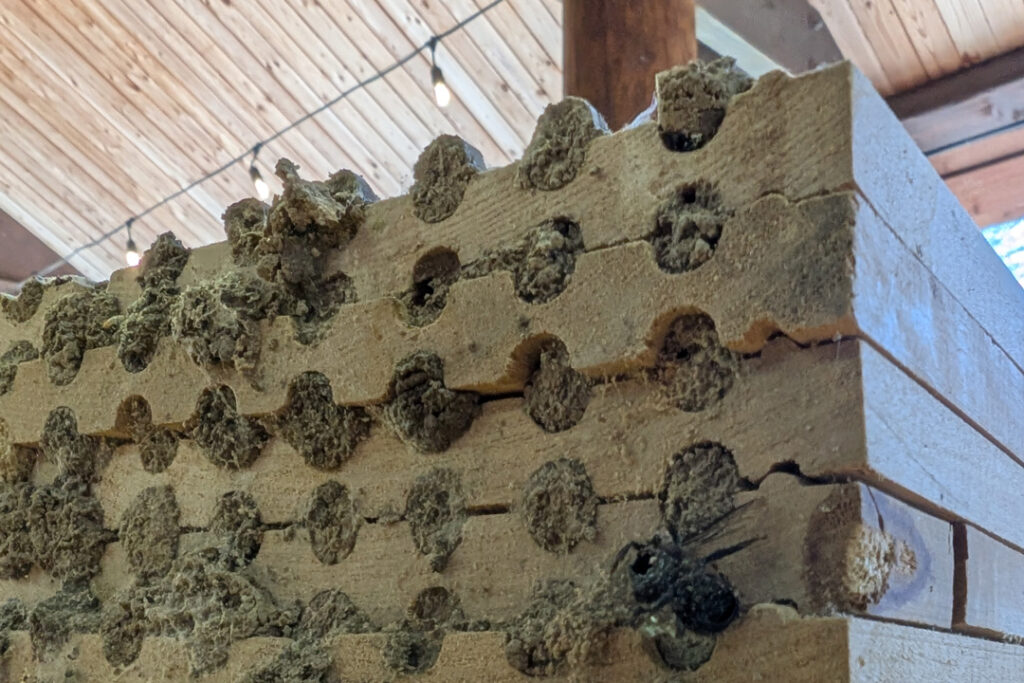
This delicate process involved carefully disassembling each bee block layer by layer, gently harvesting cocoons from their tunnels by scraping them out of each nook, and sifting through debris like dried mud, pollen, and parasitic larvae. The bee blocks at Northwest Trek were specifically designed to make this cleaning process easier.
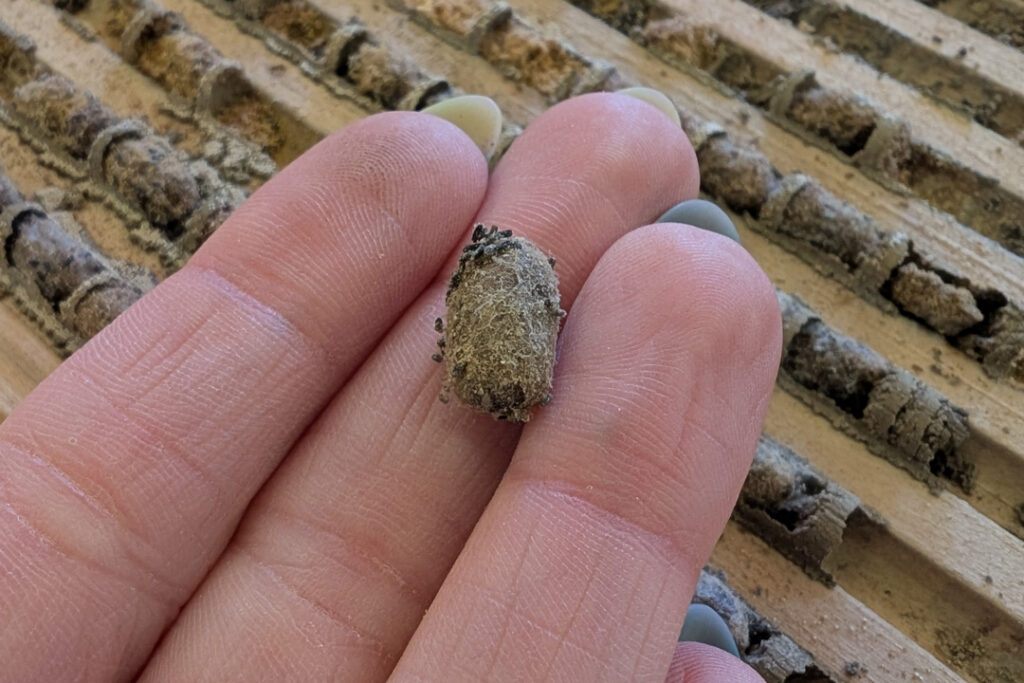
Female mason bees lay their eggs in narrow tunnels, adding a store of pollen as food for their larvae and sealing each section with globs of mud, giving these industrious insects their “mason” name. In the wild, they seek tiny openings in tree trunks, fallen branches, or bark.

Female mason bees have a fascinating method of determining the sex of their eggs. They lay female eggs toward the back of the tunnel to give the next generation the best chance of survival against predators. Male eggs are laid closer to the entrance of the tunnels, so they hatch first, eager to start buzzing around and finding mates.

Once all the cocoons were gathered, we briefly soaked them in a mild bleach-water mixture to kill mites and mold and then rinsed them in fresh water. After drying, we placed them into recycled plastic drink bottles with small holes, just large enough for the bees to emerge. These bottles were then placed near the freshly cleaned bee blocks, providing a safe, cozy place for the bees to start their new lives.


As we finished cleaning, something incredible happened: some of the mason bees began to hatch, feeling the warmth of the weekend sun. Watching these little pollinators emerge and take flight was a rewarding reminder of why this work is so important. It’s not just about cleaning nest boxes; it’s about giving these amazing little bees the best chance to thrive.


Early spring-blooming native plants, like currants, Oregon grape, and salmonberry, can help provide pollen and nectar sources for even more pollinators. Whether they’re buzzing around our gardens at Northwest Trek, or helping to pollinate the plants we love, mason bees play a vital role in keeping our ecosystems healthy and thriving. Here’s to another year of helping our mason bees “bee” the best pollinators they can be!